- Will solar panel mounting damage my roof or cause leaks?
Not when installed correctly by a trusted MCS-certified professional like Naked Solar. For standard pitched slate or tile roofs, we use specialised stainless-steel roof hooks that are securely bolted directly into the structural wooden rafters of your roof—never just screwed into the tiles. These hooks sit flat without putting pressure on the tiles themselves and are finished with heavy-duty weatherproof flashings. The result is a rock-solid, fully waterproofed framework that protects your roof’s integrity rather than compromising it. Our in-house Installation team all graduate through our Planet Maintenance academy, ensuring the highest standards our met no matter your roof type.
- What is the difference between on-roof and in-roof solar mounting?
The main difference between these two solar mounting styles is aesthetics and how they sit on the property. On-roof systems mount a rail on top of your existing tiles using specialised roof hooks. In-roof (integrated) systems replace a section of your actual roof tiles entirely, sitting flush with the rest of your roofline like a skylight (this is ideal for new builds and re-roofs). While in-roof mounting offers a sleeker, low-profile look, in-roof systems are typically 2–5% less efficient due to reduced airflow and ventilation. In contrast, on-roof systems are easier to ventilate, generally cheaper, and compatible with almost any existing roof type.
- Do I need south-facing roofs for solar mounting, or do East/West systems work?
Whilst it’s true South Facing roofs are primed for maximum generation,Naked Solar have installed many non-south facing installs which have delivered for our customers energy needs. In some cases maximum generation may not be right for your needs. As most arrays generate more energy in the summer than your property can use and don’t generate enough in the winter, having an array with a steeper pitch than normal, e.g. 60°, would increase your winter generation and reduce your summer generation. Check out our environmental factors page for more information.
- How do solar mounting systems handle high winds and storms?
Quality mounting gear is engineered from marine-grade aluminum and stainless steel designed to withstand extreme wind loading and coastal weather. Because the panels are clamped tightly into a continuous, interlocking matrix close to the roof surface, wind passes smoothly over them rather than catching underneath. Expert Solar Installers like Naked Solar take care to ensure your Solar system is safe, reliable and durable for many years to come.
- Can my roof take the weight of solar panels and mounting equipment?
For the vast majority of UK homes, absolutely. Standard on-roof solar PV systems and their aluminum-and-steel mounting hardware add an extra load of roughly 10 to 12 kg per square meter to your roof. To put that into perspective, that is often significantly less than the weight of a heavy layer of snow or standard concrete roof tiles. Before every installation, our team conducts a structural assessment to ensure your rafters are fully up to the task.
Solar Panel Mounting Systems
Choosing the right solar panel mounting system is one of the first practical decisions in any solar installation. While most attention is given to the solar panels, the mounting system determines how securely they’re installed, how well they withstand the elements and how reliably they’ll perform for decades.
Improving solar starts with sharing knowledge. So our guide is here to help everyone understand the choices available when selecting a solar panel mounting system—the foundation of every solar PV installation.
Pitched roofs
We’ve all seen Solar PV panels mounted on the roofs of homes and businesses, so here’s a rundown of the options to get them up there and keep them there for decades to come.

On-Roof Solar Panel Mounting
By far the most common method for fixing Solar PV panels to a roof. Normally the lowest priced, it also gives the best performance as ventilation is maximised, allowing the panels to keep cooler. See our Compare Solar Panels page for information on how heat affects Solar PV performance.
Strong hooks are attached to the rafters and a weather proof seal is applied. Rails are attached to the hooks and the Solar PV panels are then clamped to the rails.
£140+VAT/panel
In-Roof Solar Panel Mounting
Ideal for new builds or re-roofs where the slightly higher price of the mounting system is off-set by the reduced need for roofing fabric (slates, tiles etc). Many customers prefer the aesthetics of these systems. However you are likely to loose between 3%-5% of energy generation due to decreased ventilation of the Solar panels.
£210+VAT/panel
Metal trapezoidal roofs
Many commercial buildings have metal trapezoidal roof structures. Here the rails are secured to the ridges of a metal roof using self-tapping screws. The base of the rails has a waterproof membrane to ensure a secure weather seal. The Solar PV panels are then clamped to the rails, keeping the panels very close to the roof to minimize wind loading
£54+VAT/panel.
Metal Standing Seam roofs
Though unusual, this type of roof occasionally appears on homes and businesses. Clamps are attached to the standing seam of the roof, then a rail is attached to the clamps and the Solar Panels are secured to the rails with clamps.
£142+VAT/panel
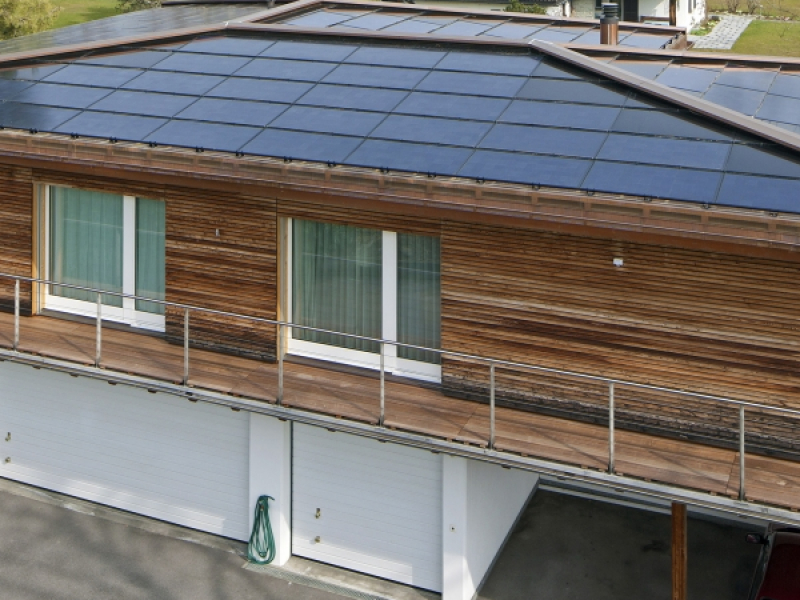
Solar PV Roof
Maximise your available roof space with a whole roof Solar systems. The Solar PV panels become the fabric of your roof, serving two purposes, weather proofing and energy supply. The interlocking Solar PV panel frames are bespoke for the mounting system so there is a limited choice of panels with these set ups. Luckily there are still good quality panels to choose from.
£ is similar to an on-roof mounting system.
Solar PV Tiles / Slates
Tile or slate shaped solar panels have been around since the C21e launched in 2008 . The launch of the Tesla Solar Roof in 2016 generated great interest in these types products. There are several manufacturers around the world and they remain a niche product. If aesthetics is not up for compromise and you can tolerate the very low performance, high price and uncertainty about their durability then these may be the product for you.
Flat roofs
There are many solutions for flat roofs. The main concern is usually how much weight the roof will hold.
Ballasted south-facing flat roof mounts
As many people are nervous about roof penetrations on a flat roof, these south-facing ballasted systems can increase your yield if you’ve got plenty of roof space, without penetrating your weather proofing. Having all the panels facing south instead of using an East/West system commonly increases the ballast requirements ten fold. It also means the space between the panels needs to be wider to avoid shading from the panel in front so South facing systems are very rarely chosen over back to back – low ballast systems.
£289+VAT/panel.
Back to back solar mounting systems
Becoming very popular over the last few years. Having an East/West system means that the ballast required is very low because the solar panels are back to back, reducing wind resistance. It also means you can get much more power in to the same space. Many people are surprised as they think Solar PV panels must be south facing. These systems will still generate at least 90% of their south-facing counterparts. Check out the diagram in our Environmental factors that affect performance page to fully understand why these systems generate more.
£170+VAT/panel – Minimum 4 panels
Console Bins
Great if you want a low level ground mount and they can work on flat roofs too. Simply a “plastic bin” that is ballasted to ensure the wind can’t move your panels. You may need quite a lot of ballast so a strong roof structure is essential. Complete flexibility in their positioning can help make use of awkward spaces.
£140+VAT/panel
Ground mounted
Who said you had to put panels anywhere near your roof? You can always mount them on the ground.
Fixed Frame Ground Mount
Often used by commercial solar farm arrays. Metal frames come in a variety of layouts, two panels high in landscape, single panels in portrait etc etc, pretty much any set up you like is available. Usually set on concrete bases, these frames can help you make use of some dead ground. As a guide, this mounting system is £200+VAT/panel
Adjustable Frame Ground Mount
Another choice with metal frames, the upright posts are pile driven into the ground, saving on concrete and reducing the footprint of the array. As a guide, this mounting system is £200+VAT/panel
Console bins
A heavily ballasted plastic bin is the best way we’ve found of describing these. They allow very flexible placement of solar PV panels and if you ever need to move them you can just unplug the panels and move the bins.
£140+VAT/panel
Build your own structure
Lots of customers have decided to make their own roof on the ground. These have taken the shape of log stores, chicken sheds, part of a gazebo or simply a wooden structure instead of a metal frame.
£131+VAT/panel, (this does not include the wooden structure).
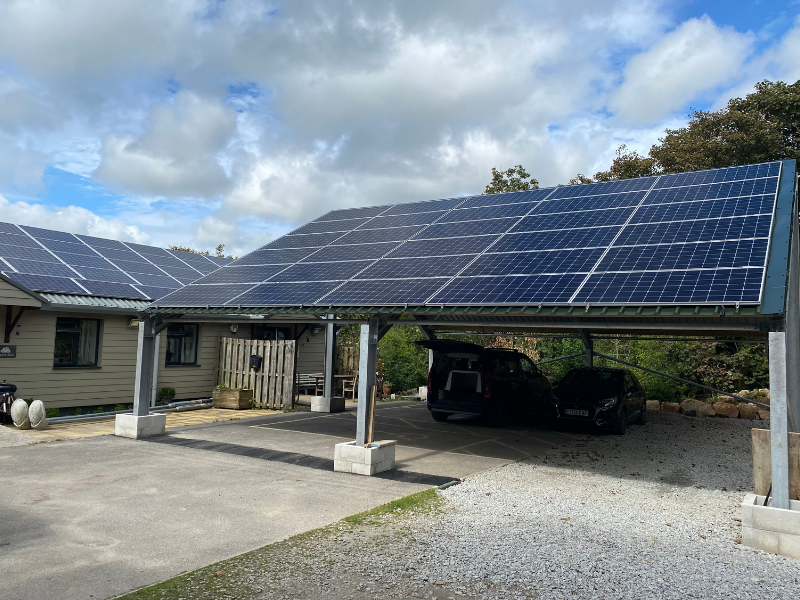
Solar Car Port
Very popular on the continent and becoming more popular on car parks in the UK. Keeping the cars cool while generating energy to charge EVs and generating energy for your home or business can be a great use of otherwise unused space.
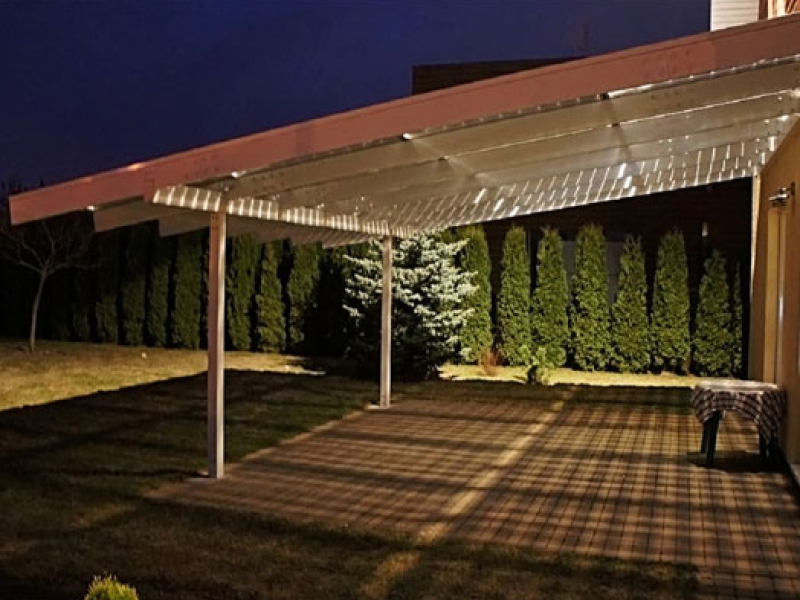
Solar PV Awning
These look great and are a fantastic way to make use of space if you want to increase your solar potential. Create a place to shade from the sun while making the most of it’s energy.
Solar Panel Mounting - Frequently Asked Questions