Solar battery storage
Home battery storage systems in the UK allow you to store excess solar energy for use when you need it most, reducing reliance on expensive grid electricity and slashing your energy bills.
Whether you’re looking to add battery storage to existing solar panels or install a complete system from scratch, understanding the key factors, from usable capacity and warranties to AI forecasting and backup power, will help you choose the right solution for your home in Devon and Cornwall, Bristol and the Southwest.
So what do I need to know about Battery Storage? Here’s the 6 questions you need to ask before making a decision.
The 6 ‘Watts?’ of Solar Battery Storage
1. What’s ‘Useable Capacity’?
Battery capacity is the amount of energy in kWh (units), that a battery can store.
However, some Solar Battery Storage systems are misleadingly advertised quoting ‘Total Capacity’. Fully discharging any battery is damaging so there’s always a minimum charge state that is maintained. While some manufacturers advertise the Total Capacity, you may not be able to use all of it.
Look for the ‘Useable capacity’ figure, which may be buried in a datasheet or even stated as ‘Depth of Discharge’, which is usually measured as a percentage of the Total Capacity.
For example the Alpha ESS Smile has an Advertised Capacity of 4.8kWh while it’s Useable Capcity is 4.3kWh.
2. What capacity do I need?
While your energy consumption and solar generation will have an influence, the most overlooked consideration is your own needs & desires. Naked Solar customers commonly consider one or all of these points that will influence their choice of battery capacity.
- Minimising bills
- Quickest payback
- Utilising Solar Grid Trading
- Powercut cover
- Planning an EV
Many Solar Battery Storage solutions are expandable, allowing you to increase your capacity in the future to match changing energy demands. This can be an appealing opportunity to ‘dip your toe’ however, some Solar Battery Storage manufacturers update their products and cease production of older expansion modules, so bear this in mind if you’re planning future expansion.
3. What’s covered by warranties?
Warranties can be a minefield in any industry and unfortunately, the Solar Battery Storage industry is no exception. There’s 3 elements to be aware of in Solar Battery Storage warranties.
- Product – Covers the intergrity and functionality of the physical unit itself. Labour may or may not be covered depending on the manufacturer.
- Warrantied Cycles – refers to the equivalant energy throughput of one full discharge, so you can multiply the Useable Capacity of the battery by the number of cycles warrantied to calculate how much energy it’s warrantied to deliver.
- Warrantied Capacity % – As battery capacity degrades over time, Warrantied Capacity is the minimum amount of energy storage capacity guaranteed to be remaining by the manafucturer within the warranty period.
It’s important to note, Warranties are valid for whichever gaurantee is reached first, e.g. for Sigenergy it’s 10 Years OR 3500 cycles.
4. What is forecasting/AI?
To maximise the benefits of your Solar Battery Storage system, many manufacturers include Forecasting or AI systems, enabling your battery to charge up on cheap rate electric if there isn’t going to be enough solar generated the following day to fill your battery and keep you going through evening peak rate periods.
The Forecasting or AI comes in to play to learn your consumption habits, link that with weather forecasts to predict how much to charge your Solar Battery during off-peak times, enabling you to minimise bills and maximise Solar Grid Trading opportunities without needing to manually invervene.
5. What about power cuts?
Not every Solar Battery storage system will continue to work when there’s a powercut. To add this capability, your Solar Battery Storage system will need to disconnect from the grid to protect any maintenance workers who are repairing the grid. This requires the addition of a grid isolation switch which most manufacturers now refer to as the ‘Gateway’. In the table below you’ll see we’ve listed the expected price for adding this capability. Not all Solar Battery Storage systems will allow your Solar to continue to work in a powercut, especially if your full house is not covered by the backup.
6. What’s the right one for me?
We hope that these explanations and the table below will help you to understand what to consider when choosing a Solar Battery Storage system. There are many more manufacturers and options available than we can fit in the table, so now that you have the questions you need to ask, go explore!
Of course Naked Solar’s Award-Winning team of expert Solar Consultants would love to help. They’re highly trained and impartial to help you find the best solution for your specific needs, even if that solution is to not buy Solar Battery Storage.
Compare Solar Batteries
Use the table below to compare some of the battery systems available on the market. This information is for guidance only, so check with our friendly team at Naked Solar, or the manufacturer for the latest info before making your final decision.
| Advertised Capacity (Min) | Useable Capacity (Min) | Installed Price from | Product Warranty | Warrantied Capacity | Warrantied Cycles | Weather Forecasting/AI | Expandable To | Full Home Power cut Cover | |
|---|---|---|---|---|---|---|---|---|---|
| Tesla Powerwall 3 | 13.5kWh | 13.5kWh | £8,921 | 10 yrs | 80% | Unlimited | Yes | 54kWh | + £568 |
| Sigenergy SigenStor | 6kWh | 5.8kWh | £6,697 | 10 yrs | 60% | 3500 | Yes | 52.6kWh | + £1,798 |
| GoodWe ESA All-In-One | 5.1kWh | 5kWh | £6,011 | 10 yrs | 80% | 6000 | Yes | 48kWh | Yes |
| Fox ESS - ECS Series, EP5, EP11, EVO, PowerQ | 5kWh | 4.66kWh | £5,655 | 12 yrs | 70% | 3375 | No | 37.7kWh | + £1,716 |
| AlphaESS – SmileG3 | 4.8kWh | 4.5kWh | £6,011 | 10 yrs | 80% | Unlimited | No | 19.2kWh | No |
| Anker Solix X1 | 5kWh | 5kWh | £6,330 | 10 yrs | 80% | 2634 | No | 30kWh | No |
| EcoFlow Power Ocean | 5.1kWh | 4.8kWh | £6,120 | 15 yrs | 70% | 6000 | Yes | 20.4kWh | + £1,678 |
| SolarWatt (BMW) Vision | 5.8kWh | 5.2kWh | £7,035 | 10 yrs | 70% | 4273 | Yes | 18.2kWh | No |
| GivEnergy – AIO, Giv-Bat | 5.2kWh | 4.8kWh | £6,346 | 12 yrs | 70% | Unlimited | No | 28.5kWh | + £1,600 |
| Enphase IQ Battery | 5kWh | 5kWh | £5,973 | 15 yrs | 60% | 6000 | No | 5kWh | No |
| Duracell - Dura5, Dura16 | 5.12kWh | 4.6kWh | £5,965 | 10 yrs | 60% | 8000 | Yes | 163.84kWh | No |
How Solar Batteries Help You Night & Day
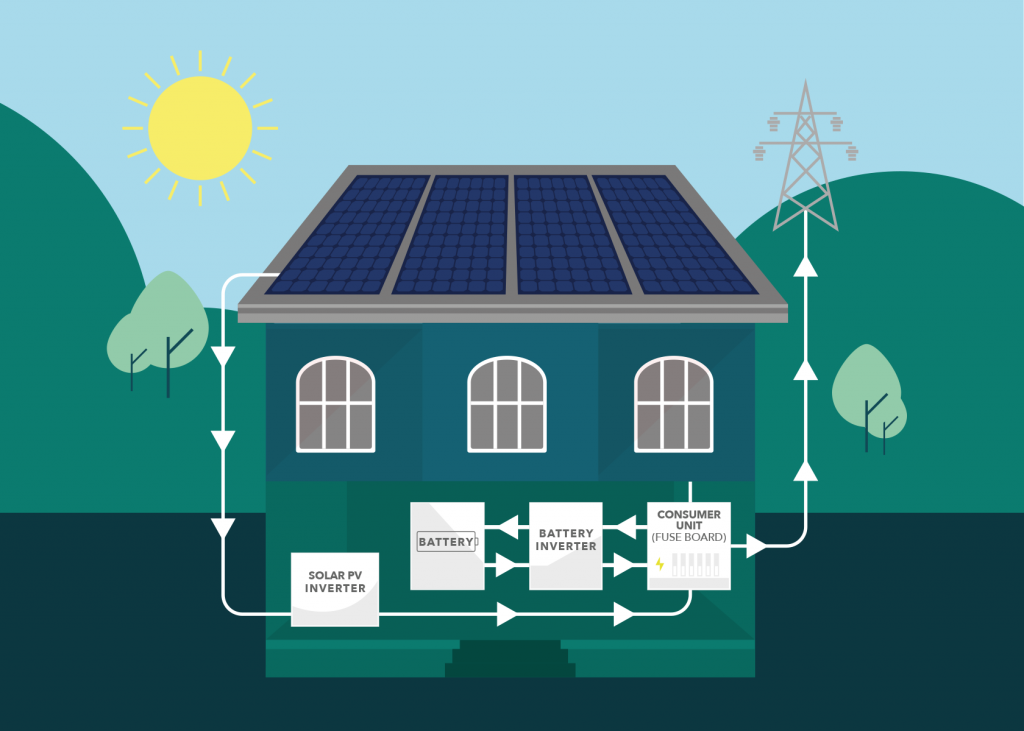
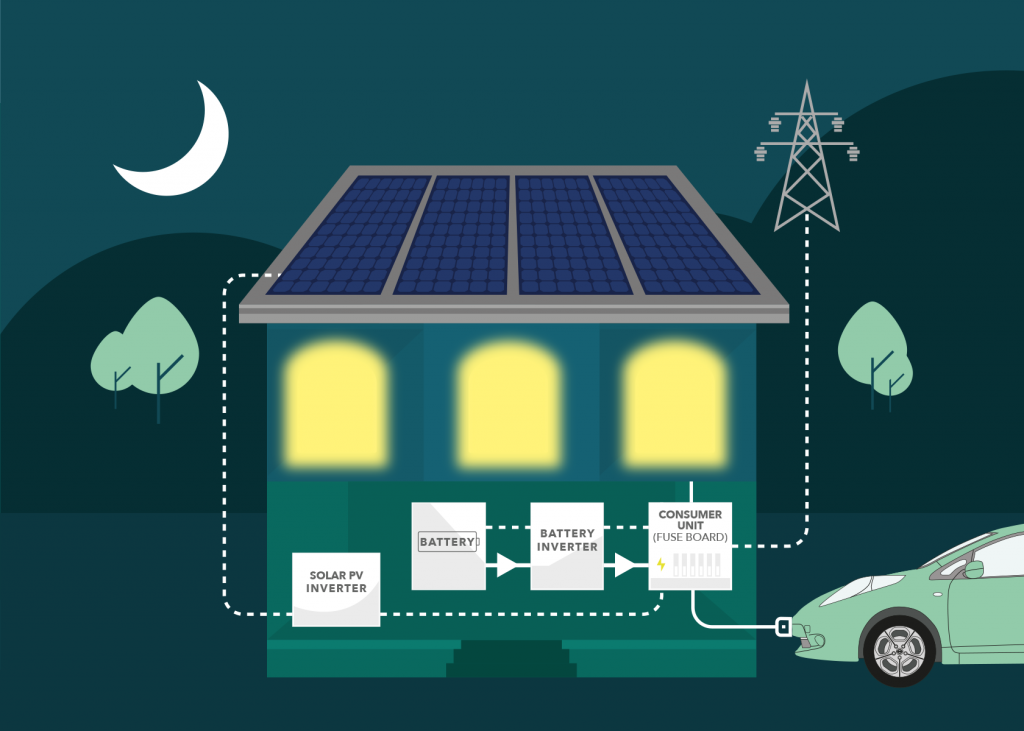
People often ask ‘Can solar panels work at night?’ The short answer is no. But with a solar battery, in effect they do.
During the day, when solar panels are generating more power than your property is using, excess power is diverted to the solar battery for use later. When the sun goes down, or if you’re using more energy than your panels are providing, the solar battery will kick in to give you power and prevent drawing from the grid.
Modern Time-of-Day (ToD) tariffs maximise your savings by treating your battery as a trading asset. Your system automatically charges on cheap overnight rates (2 am-5 am) and exports stored energy to the grid at the most profitable peak rates (4 pm-7 pm), maximising your return with Solar Grid Trading.
Deeper Dive into Solar Battery Storage
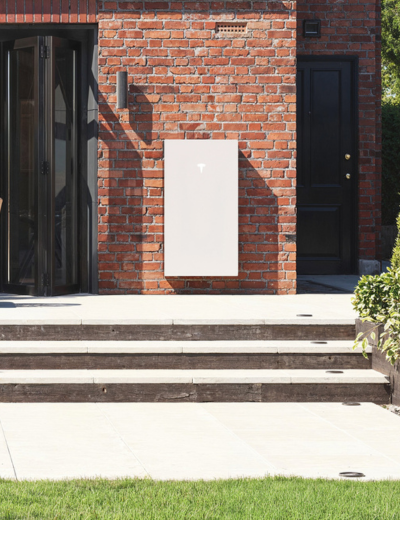
TESLA POWERWALL 3
The Powerwall has transformed Solar for good. Tesla Powerwall 3 brings groundbreaking advancements that set a new benchmark for Solar Battery Storage systems, including unrivalled power output and exceptional flexibility to meet the needs of any Solar project.
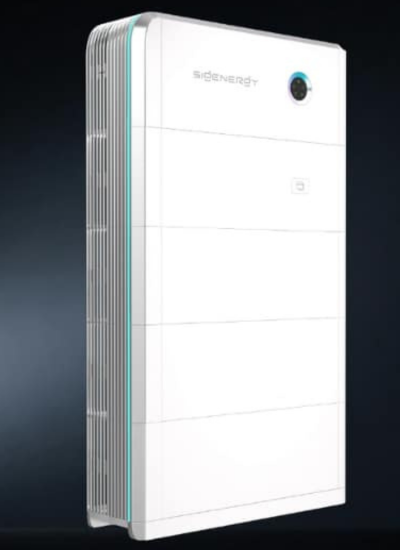
SIGENERGY SIGENSTOR
SigenStor is an all-in-one smart energy solution designed to supercharge your home’s solar system. This single, sleek unit combines everything you need: a solar inverter, EV DC charger, battery pack, power conversion system, and energy management system.
Powered by AI, the SigenStor is a highly integrated and intelligent system that optimizes your home’s energy usage, making it an excellent choice for any homeowner seeking to upgrade their solar power.
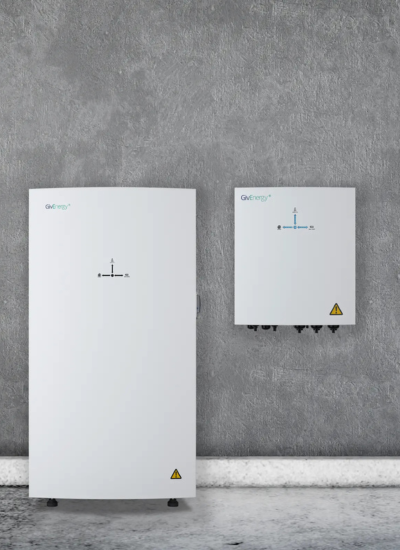
GIVENERGY ALL IN ONE
GivEnergy is a British Owned Battery Storage Manufacturer with manufacturing/Research and Development facilities in the UK, Ireland, Australia and Shenzhen China (Shenzhen Givenergy Technology Co., Ltd). Their “All In One” Home Battery can power even the highest-demand households with maximum efficiency and minimum energy costs, making them a Tesla Powerwall alternative UK residents love.
Want to see how the competition stacks up? Explore our breakdown of other market-leading battery storage systems to find the perfect fit for your home.
Solar Battery Price UK
Solar battery prices in the UK typically range from around £3,700 to £12,900 depending on capacity, technology and features. Entry-level systems with 5kWh usable capacity start from approximately £5,600-£6,700, whilst premium systems offering 13.5kWh or more sit between £8,900-£12,900.
The good news? Since February 2024, all solar battery installations benefit from 0% VAT, making now an excellent time to invest. This is set to increase back up to 5% VAT on 1st April 2027.
Getting Value Beyond the Price
When comparing prices, it’s crucial to look beyond the headline cost and consider what you’re actually getting; systems with AI-powered forecasting, longer warranties and unlimited charge cycles may cost more upfront but often deliver better long-term value.
For instance, whilst a 13.5kWh system might appear more expensive initially, the cost per kWh of usable storage can actually work out more economical than smaller systems when you factor in expandability and warranty coverage.
Is Battery Storage Worth It?
The short answer is: it depends on your energy usage, goals and how you plan to use it.
Battery storage becomes particularly worthwhile when you combine several benefits, reducing bills through increased self-consumption, taking advantage of Solar Grid Trading to earn from peak-rate exports, and gaining energy independence with backup power protection.
Homes with significant evening energy consumption typically see the strongest returns, as you’re using stored solar instead of buying expensive grid electricity during peak times.
Maximising Your Return on Investment
The systems with AI-powered forecasting maximise savings by intelligently charging from cheap overnight rates when lower solar levels are forecast for the next day, meaning you’re always using the cheapest energy available.
Payback periods vary considerably, typically 7-12 years, and households making full use of time-of-use tariffs plus Solar Grid Trading opportunities will see faster returns.
Systems with unlimited warranty cycles and higher usable capacity percentages maintain their value better over time, whilst those offering full-home backup capability provide peace of mind that’s difficult to quantify financially but invaluable during power cuts.
How Does Battery Storage Work?
Battery storage systems capture excess electricity generated by your solar panels during the day and save it for when you need it most, typically evenings and overnight when your panels aren’t producing.
When your solar panels generate more power than your home is using, that surplus energy charges your battery rather than being exported to the grid at low rates.
Later, when the sun sets or you’re using more energy than your panels provide, the battery automatically supplies your home, keeping you off expensive grid electricity.
Smart Features and Automation
Modern systems take this a step further with intelligent features, AI and weather forecasting technology can predict when there won’t be enough solar generation the next day and automatically top up your battery using cheap overnight grid electricity, ensuring you always have stored energy available without manual intervention.
Solar Grid Trading
The most advanced systems also enable Solar Grid Trading, where your battery charges during the cheapest overnight periods (typically 2am-5am) and can export stored energy back to the grid during peak-rate times (4pm-7pm), turning your battery into a trading asset that actively reduces your bills and supports the grid.
The process is entirely automatic, you simply live your life whilst your battery manages your energy intelligently in the background.